
TLS Annual Meeting 2026
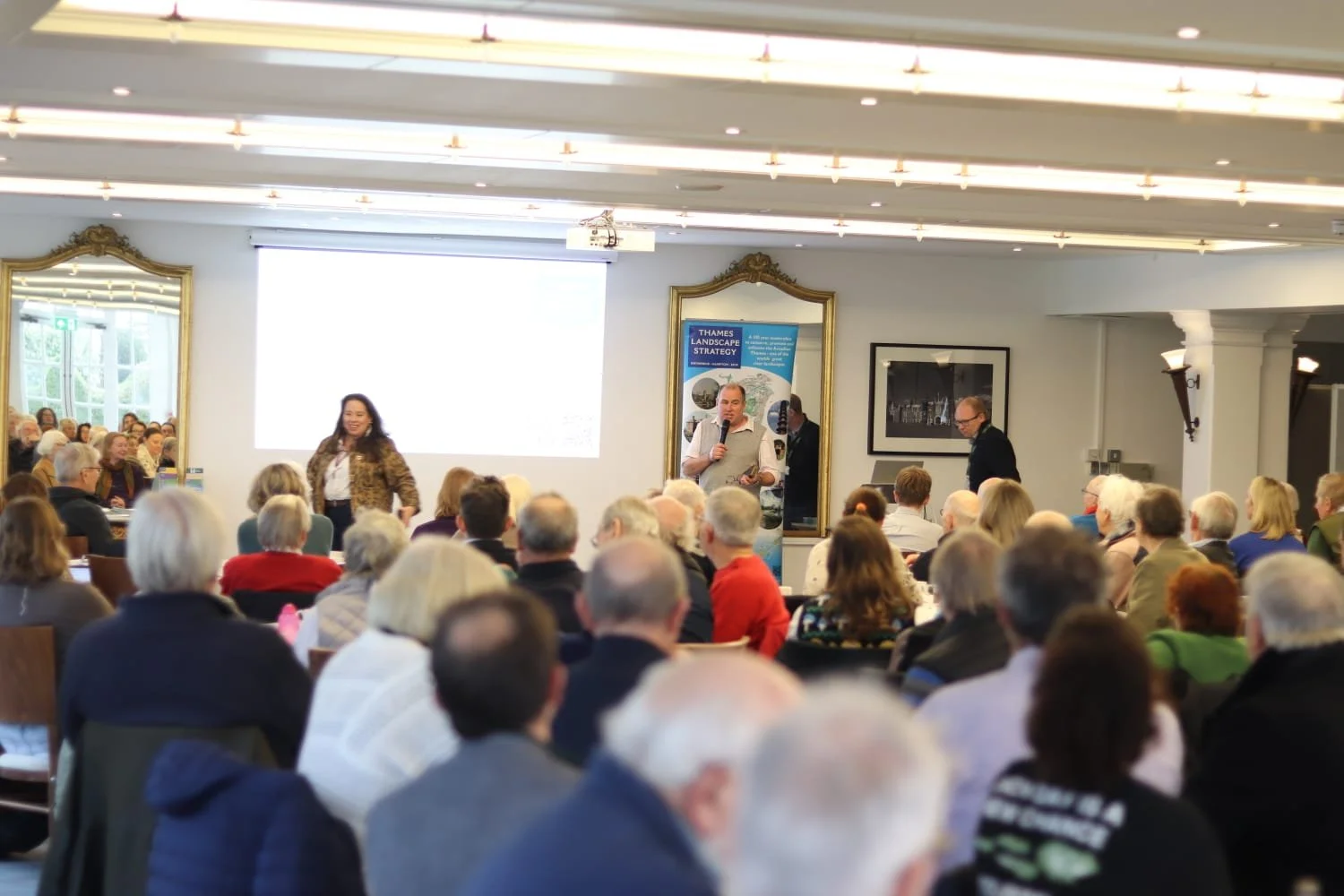
Over 120 people attended the TLS Annual Meeting in January 2026
The Thames Landscape Strategy was graciously hosted by Hampton Court Palace for its 2026 Annual Meeting in January. Over 120 people representing over 50 organisations from councils to community groups, businesses and private citizens. The attendees were treated to an afternoon of discussion surrounding the impacts of climate change on landscapes and properties - from guest speakers
Kevin Martin, Head of Tree Collections and Arboriculture Royal Botanic Gardens Kew
Planting for the Future: Kew’s Landscape Succession Planuses climate models to determine the species we need to start planting nationally now, to protect UK landscapes for future generations. Kew hopes the report will act as a blueprint for urban spaces, botanic, public and private gardens, and calls on the horticulture industry as well as urban planners to recognise concerns around an exclusive focus on native species.
Alex Wigley Head of Gardens and Parks, Historic Royal Palaces
Responding to Climate Change in Hampton Court Gardens: Alex explored the interconnected relationships between plants, animals, microorganisms, and the environment at Hampton Court and how this is subject to the same climatic changes and loss of biodiversity as everywhere else. Climate change will hit formal gardens and necessitate new ways to manage these cherished places. Using Hampton Court as an example, Alex outlined plans to make the gardens more sustainable and resilient that can be replicated elsewhere across the Arcadian Thames.
Joe Clark Senior Advisor TE2100 and Sarah Smith London Area Flood and Coastal Risk Manager Environment Agency
The West London Communities Project:. This session explored the way that the West London Communities Project sets out to understand future floodrisks to properties and critical infrastructure in locations between Richmond and Sunbury including Isleworth, Twickenham, Teddington, Kingston, Thames Ditton, Molesey and Sunbury. The project will identify and implement measures that will increase resilience to flooding from 2035 onwards following planned modifications in the way that the Thames Barrier operates.
Edward Barsley Founder and Director of the Environmental and Design Studio
Retrofitting for Flood Resilience: Ed spoke about design solutions to build resilience to existing buildings and infrastructure that could be particularly relevant to riverside communities as flood risk accelerates throughout the century. Referencing his ground-breaking book (Retrofitting for Flood Resilience) he explored the range of different ways in which the built and natural environment can be adapted to reduce the severity of the negative consequences of flooding, and their frequency
Following the presentations there was a round table discussion on the implications of these issues locally as part of the Thames Landscape Strategy refresh.