
Havering Trial Area Walk and Steering Group Sessions
Another great month for TEP’s work on the JTS!
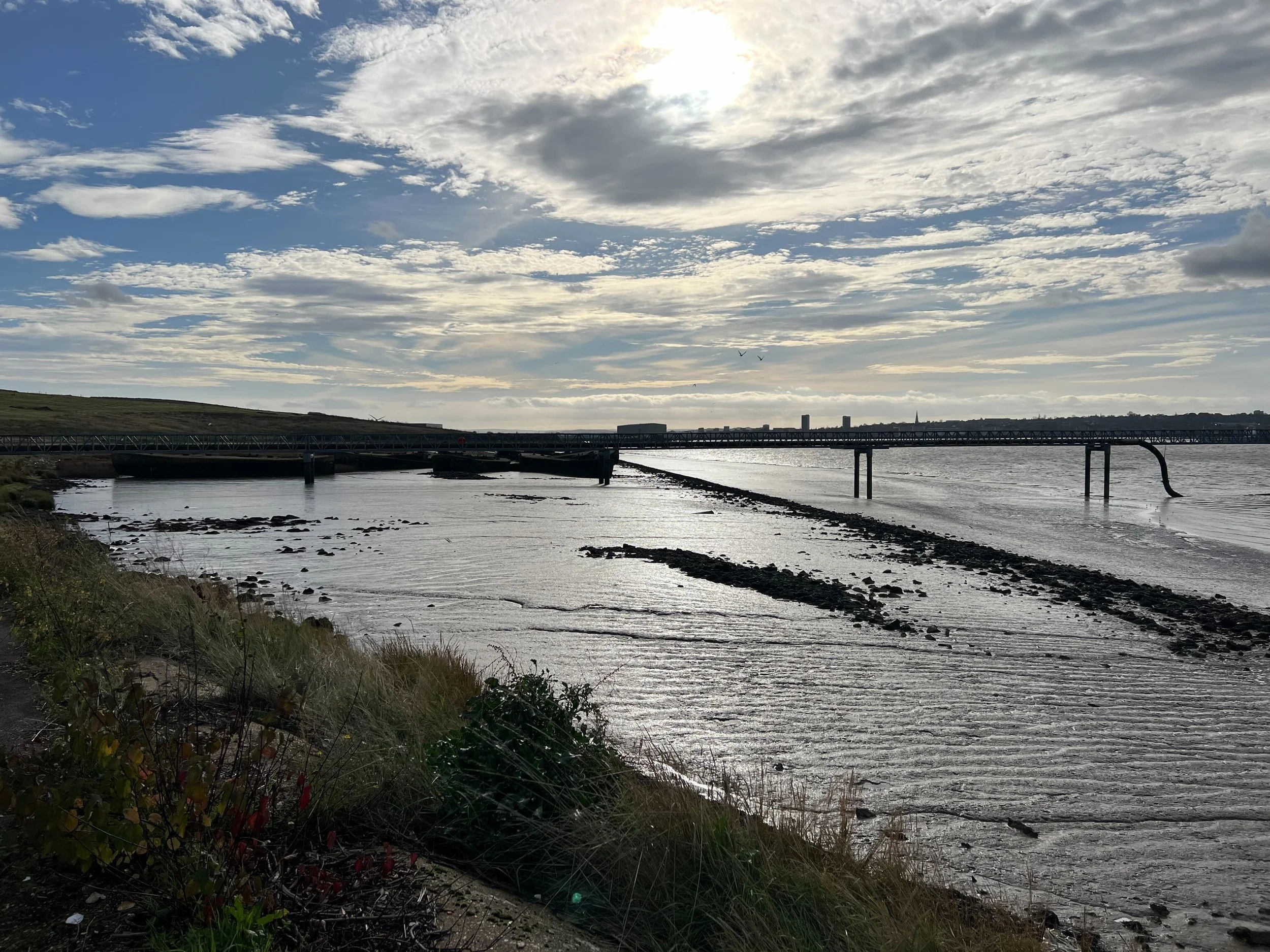
Our work on the Landscape Character Assessment is progressing nicely. On the 12th of November the team headed out to Havering to conduct a trial area walk along the riverside and Rainham landfill, through the Thames Path. This was a great opportunity for the team to visit one of the more industrialised areas within our JTS remit and get to know the eastern riverside a little bit better.
This walk allowed to see a great mix of landscapes, ranging from industry campuses (i.e., Tilda rice factories) to historic landfill sites – all of which impact the management of flood risk on the riverside. The team also left with an array of observations, spanning from identifying clear opportunity areas in the region to noting the fun art installations along the route, depicting witty nautical jokes.
Overall, this was not only a great learning opportunity which will inform the JTS work going forward, but also a great way to get the team out and about and connecting with the riverside!
Alongside this work, we have also continued our work directly with the councils. In November, we held our third Steering Group meetings with the councils from Thames Strategy London Central and Thames Strategy East. These meetings were themed around the juxtaposition of Safety and Access in the riverside.
Often, in speaking about the riverside, we think of ways to make it accessible and improve the views and relationship with the river. While this is incredibly important, it automatically poses a question of safety in access. This led us to challenge the councils to think about how we can create a riverside that is accessible, safe and attractive to local communities and come up with recommendations for addressing this issue.
The sessions had a really good turnout and provided some key insights into the ways that we explore safety and access in the riverside. Mainly, in understanding the complex logistical and legislative background that follows these questions. We were also able to identify some of the work councils have already been doing to address this challenge and outline how we might reflect it in the upcoming strategy documents.
We look forward to all the exciting work coming up for JTS and to share it with you all!
Looking ahead, the next round of Steering Group meetings is scheduled for November and will shift the thematic focus to Safety and Access. This reflects the dynamic character of the Thames Strategies, where even though there is a focus on flood risk management, our goal is to understand how we can understand the latter in a holistic sense and respond to some of the other concerns posed by our steering group members. Our future sessions, will also focus on themes such as community engagement, where we anticipate high engagement and active contribution from all partners.
Progress is also running strong on the Landscape Character Assessments (LCAs). TEP has finalised the selection of “trail areas” for these LCAs, and the first trial was successfully conducted in Westminster on 3rd October, and we will be holding another ‘trial area’ in Havering on the 12th of November. These trial areas are important as they allow us to check that the methodology we are using to conduct the LCAs is applicable to all different and characters areas of the river, and can flag all areas of concern and opportunity.
Furthermore, the LCA brief is now out to tender, marking a major milestone as we move from definition into delivery. Complementing this, our stakeholder-engagement plans are currently being drafted, setting out how we will involve local communities, NGOs, local authorities and other key audiences in shaping narrative, data-gathering, and strategic input.